Основи Впливу: Моніторинг та Оцінка | ZMINA:Resilience Нарощування Потенціалу
Цілі
Цей вебінар із нарощування потенціалу був присвячений моніторингу та оцінці (Monitoring and Evaluation, M&E) як стратегічній організаційній практиці, а не бюрократичній вимозі для культурних і креативних організацій, які вже реалізують або планують реалізовувати міжнародні проєкти, що фінансуються Європейським Союзом. Сесія була розроблена, щоб зробити M&E зрозумілими й доступними для організацій, які тільки починають системно працювати з оцінкою впливу, а також запропонувати практичні підходи, які можна одразу застосувати у своїй діяльності.
Сесія мала на меті допомогти учасникам:
- Зрозуміти різницю між моніторингом (поточний збір даних) та оцінкою (аналіз значення цих даних для результатів і впливу)
- Переосмислити М&Е з вимоги донора на інструмент навчання, що посилює процес прийняття рішень, якість програм і довіру партнерів
- Застосовувати модель Теорії змін (Theory of Change) для планування діяльності, починаючи з бажаного впливу, а не з переліку запланованих заходів
- Зрозуміти зв'язок між Золотим колом (концепція Саймона Синека «Почни з чому») та підходом до розробки проєктів, орієнтованим на вплив
- Визначати відповідні кількісні та якісні індикатори, релевантні для роботи у сфері культури
- Обирати практичні та пропорційні методи збору й використання даних без потреби у значних додаткових ресурсах
- Зрозуміти, чого саме програми ЄС у сфері культури очікують від М&Е в проєктних заявках і звітності
- Розпізнавати найпоширеніші помилки в М&Е і знати, як їх уникати
- Поступово впроваджувати М&E в діяльність організації, починаючи з реалістичних і досяжних кроків
Спікерка
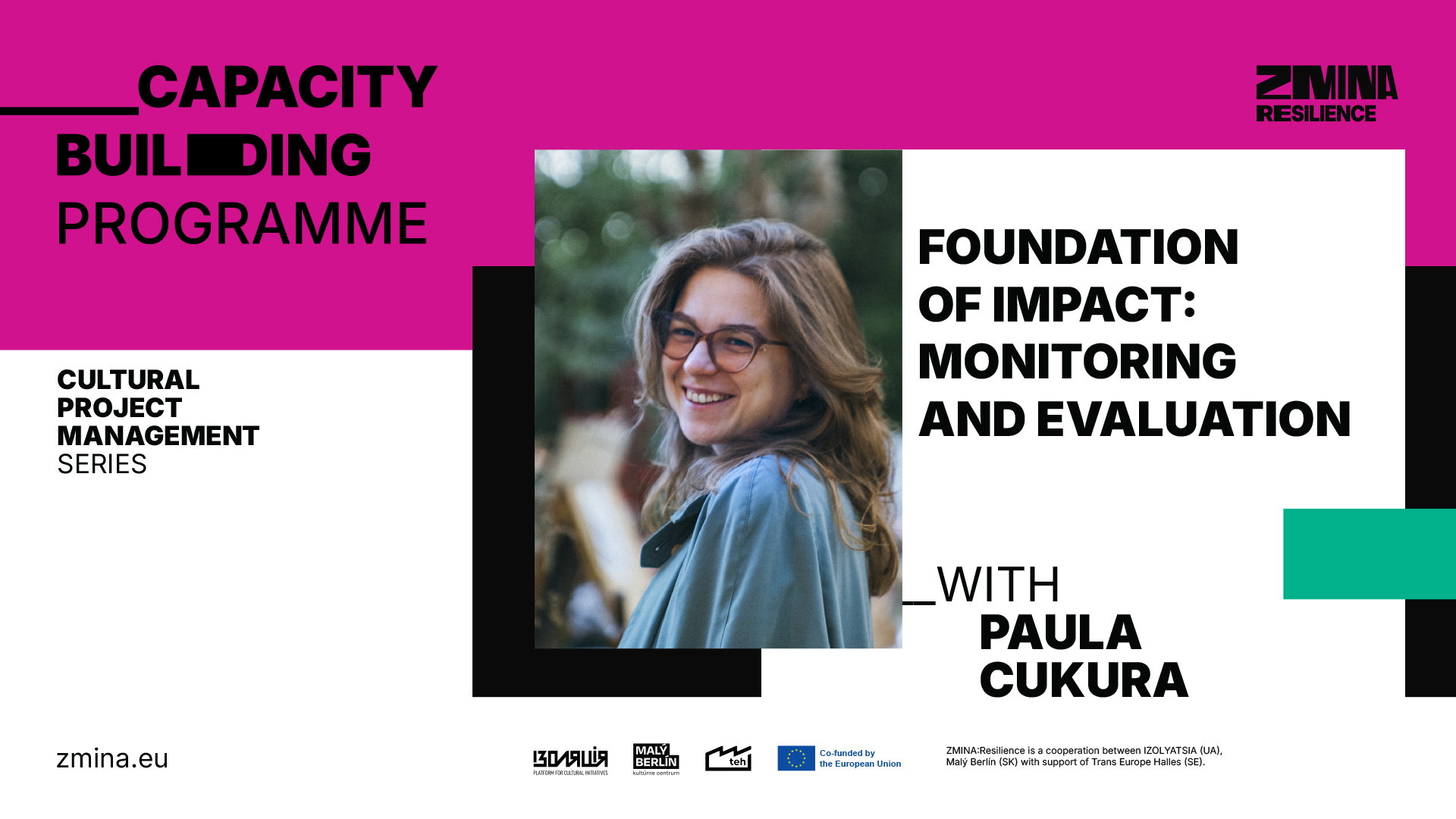
Паула Цукура(Paula Cukura) — соціальна інноваторка з Риги (Латвія), яка вже дев'ять років підтримує ініціативи у сфері соціальної та екологічної справедливості. Її діяльність сприяла розвитку креативних кварталів і громадських просторів, а протягом останніх семи років вона тісно співпрацює з Латвійською академією культури. Паула здобула магістерську освіту з креативних індустрій та управління зростанням за спільною програмою Латвійської академії культури та Ризького технічного університету, де нині працює. Спеціалізується на оцінці впливу та розробці стратегій досягнення впливу, а також працює в проєкті RESIST (Регіональні екосистеми соціальних інновацій та соціальних перетворень), у межах якого було створено відкриті ресурси з оцінки соціальних змін і якості індикаторів.
Зміст
Вебінар був побудований як послідовний перехід від теоретичних засад до їхнього практичного застосування. Спікерка розглянула дві ключові теоретичні моделі: «Золоте коло» (The Golden Circle) та «Теорію змін» (Theory of Change), проілюструвавши їх на прикладі фестивалю культурного обміну. Далі увагу було зосереджено на індикаторах, методах збору даних, вимогах програм Європейського Союзу до моніторингу та оцінки, а також на поширених помилках і способах їх уникнення.
- Золоте коло: почни з «чому»
- Теорія змін: як діяльність створює вплив
- Індикатори та методи збору даних
- M&E в проєктах ЄС
- Поширені помилки та ключові висновки
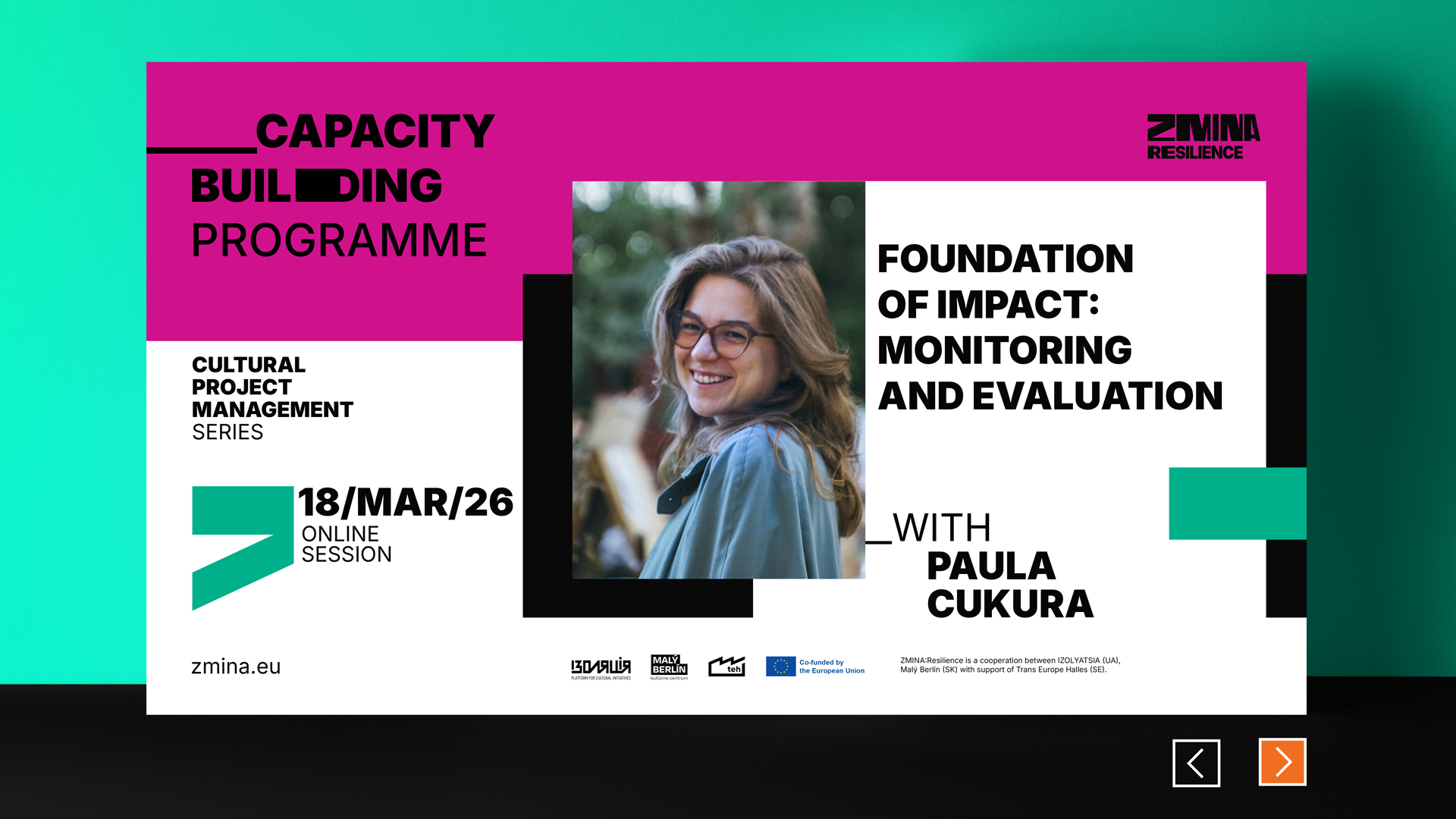
Вебінар відбувся 24 березня 2026 року англійською мовою.
Related Resources
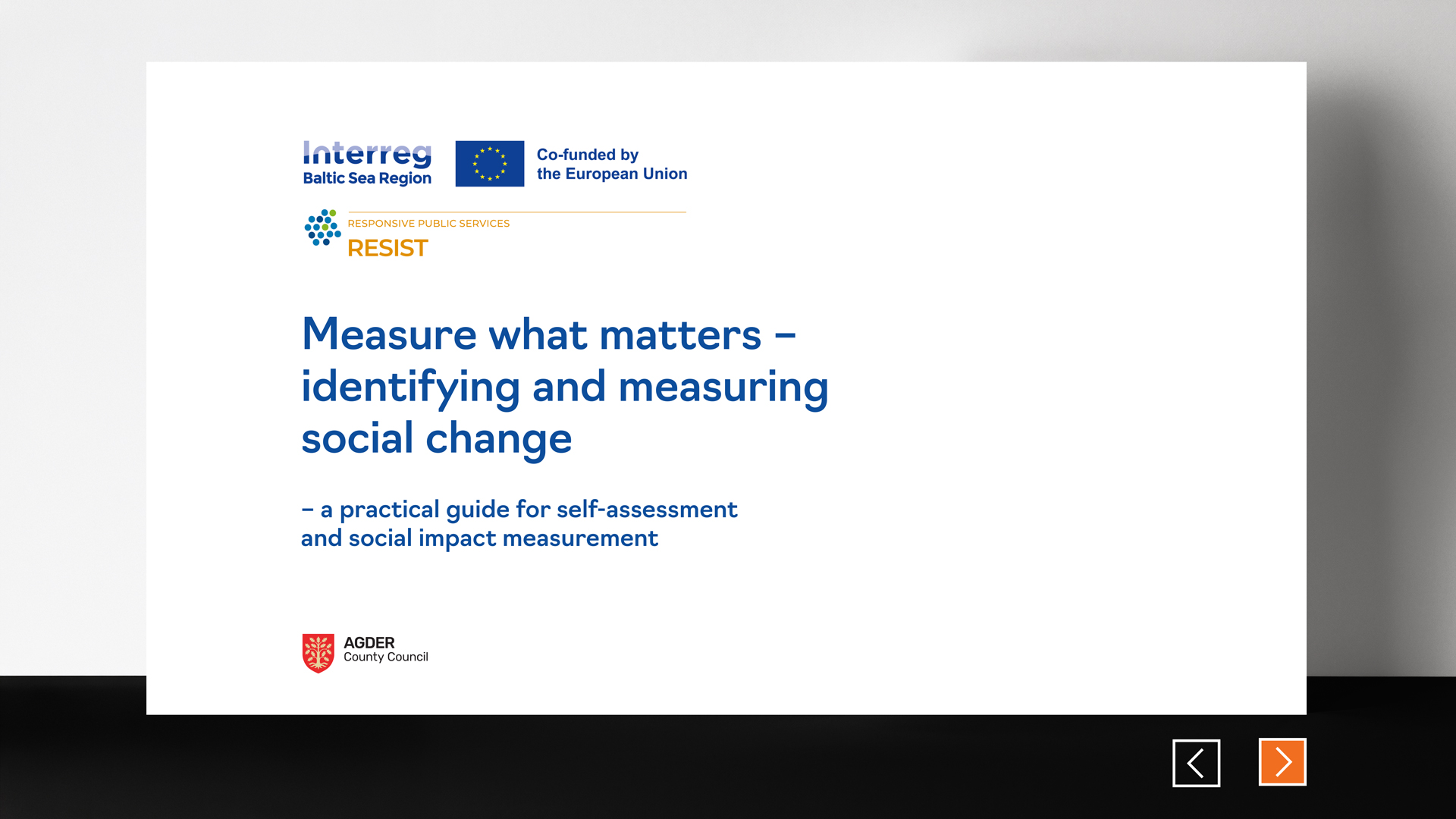
Практичний посібник з оцінки соціального впливу
RESIST project (Interreg Baltic Sea Region)
Open →
Чекліст якості індикаторів і приклади методів / джерел даних
RESIST project (Interreg Baltic Sea Region)
Open →
Посібник проєкту C'man з культурного менеджменту
Pro Progressione (HU), Central European University (AT), The Green Room (FR), and Kea European Affairs (BE)
C'man project (Erasmus+, 2021 – 2023)
Open →
Я безцінна! Посібник з оцінки ефективності мистецької організації
Vassilka Shishkova
IETM - International network for contemporary performing arts
Open →